

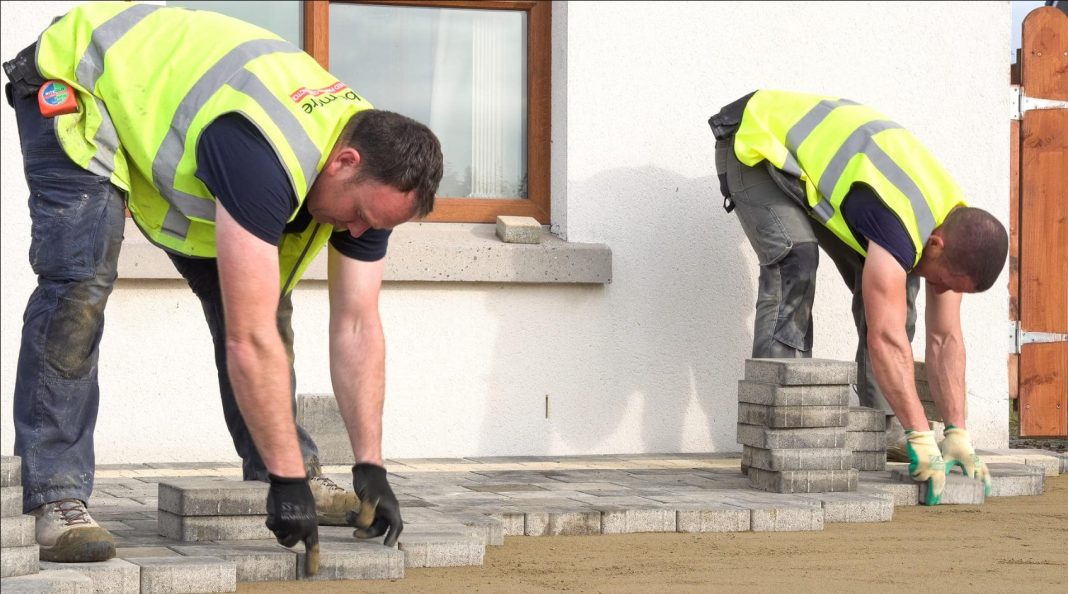
Having seen enough driveways and patios go up and go wrong around town, some issues keep repeating. These are the faults that appear again and again on Paving Cork jobs, and almost all of them can be prevented with proper planning.
Mistake #1: Cutting Corners on the Base
This is the biggest one.
A shallow or poorly compacted sub-base may not show problems on day one, but it can become a major issue within a couple of winters. No matter how much pressure there is to complete the project quickly, the base should never be the area where shortcuts are taken.
It is the foundation that supports the entire surface, and every other part of the installation depends on its quality.
Mistake #2: Ignoring Drainage Until It Becomes a Problem
Water always needs somewhere to go.
If a driveway is installed without proper falls and drainage systems, problems such as standing water, winter ice patches, and moisture reaching the building foundations can develop.
Drainage should never be treated as an afterthought. It needs to be considered during the design stage of every major Paving Cork project.
Mistake #3: Choosing Colours and Patterns Only From a Brochure
Small material samples can look completely different when installed across an entire driveway.
A colour that appears warm and attractive in a showroom may look completely different across forty square metres under Cork’s natural lighting conditions.
Better Ways to Choose Materials
- Ask to see a larger sample area before making a final decision.
- Visit completed projects using the same paving material.
- Consider how the colour will look in different weather conditions.
- Think about long-term appearance, not only the first impression.
Mistake #4: Underestimating Access Problems
Steep driveways, narrow side entrances, and terraced properties without rear access can significantly increase labour requirements.
These challenges are often overlooked during the planning stage and can later result in delays, rushed work, or reduced quality as contractors try to recover lost time.
Always discuss access limitations clearly before any Paving Cork work begins.
Mistake #5: Not Asking About Maintenance Requirements
Many homeowners view paving as something they install once and forget about.
However, different materials require different levels of care.
Resin surfaces may need occasional resealing, block paving may require joint sand replacement, and permeable systems need regular cleaning to maintain drainage performance.
Always ask your installer about future maintenance requirements and request details in writing where possible.
The Common Reason Behind These Mistakes
Most of these problems have one thing in common: rushing the decision-making process to get the work started quickly.
Taking extra time before the project begins, asking detailed questions, and understanding the small details usually leads to much better results.
Once you know what to look for, these issues are not difficult to avoid. The challenge is that many homeowners only learn about them after the work has already been completed and the contractor has moved on.
Mistake #6: Not Getting the Agreement in Writing
A surprising number of homeowners still arrange Paving Cork work based only on a handshake and a phone conversation.
Without a written scope of work and estimated timeline, there is little protection if the finished result does not match expectations.
A simple written agreement only takes a short time to prepare and protects both the homeowner and the contractor.
Mistake #7: Failing to Check Insurance
Choosing a contractor without confirming public liability insurance can create unnecessary risks.
A professional Paving Cork contractor should have appropriate insurance and should be comfortable providing proof when requested.
This protects you from being responsible for unexpected accidents or damage that may occur during the project.
Learning From Other Homeowners’ Experiences
Speaking with neighbours who have recently completed paving work can be one of the most valuable research steps.
Ask them:
- What surprised them during the project?
- What would they do differently?
- Did the contractor provide good communication?
- Did they stand behind their work after completion?
Real feedback from someone who has already experienced the process is often more useful than polished online reviews.
Conclusion
Avoiding these mistakes is not about being overly cautious. It is simply about doing enough research before committing to a driveway or patio project. A few hours spent planning, asking questions, and checking details can save years of frustration and help ensure your Paving Cork installation delivers the results you expect.