

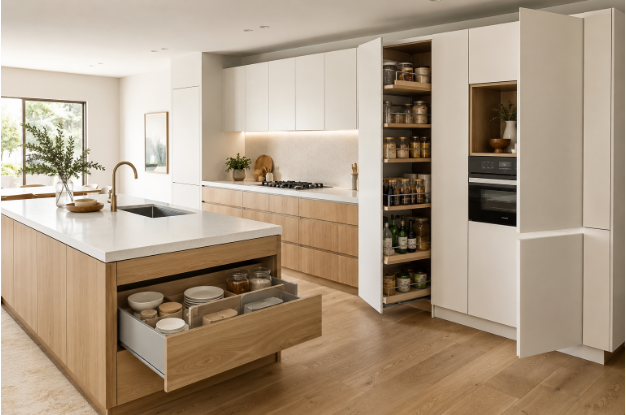
Kitchen cabinets are one of the most noticeable and frequently used parts of a home. They influence how much storage is available, how easily people move around the room, and how different design elements work together. For this reason, selecting cabinetry should involve both aesthetic and practical considerations rather than focusing on appearance alone. For homeowners in Dublin, Ohio, a well-planned kitchen can make everyday activities more comfortable while giving the home a more cohesive appearance. Cabinet door style, storage configuration, color, hardware, lighting, and layout all contribute to the final result. Understanding how these elements work together can help homeowners make more informed decisions during a renovation.
Begin With the Kitchen Layout
Before choosing a cabinet style, homeowners should evaluate the existing layout. The location of appliances, windows, doors, plumbing, and electrical connections can affect where cabinets can be placed. It is also useful to think about movement between the refrigerator, sink, cooking area, and preparation surfaces. A cabinet arrangement should allow people to complete common tasks without unnecessary movement. Accurate measurements are equally important. Even attractive cabinetry can create problems if doors, drawers, or appliances do not have enough clearance.
Choose a Cabinet Door Style That Fits the Room
Cabinet doors establish much of the visual character of a kitchen. Traditional profiles can introduce decorative detail, while simpler doors can create a cleaner appearance. Homeowners should consider how the cabinet profile will interact with countertops, backsplash materials, flooring, lighting, and appliances. A flexible style can make it easier to update other parts of the kitchen in the future. Simple cabinetry can also work well in open-concept homes because it provides a clean visual transition between the kitchen and nearby living spaces.
Why Flat Panel Cabinets Work Well in Modern Kitchens
Flat panel doors feature a smooth, straightforward appearance with minimal decorative detailing. This makes them particularly suitable for homeowners who prefer contemporary or minimalist interiors. Modern flat panel kitchen cabinets can be paired with a variety of finishes and materials. Light colors can contribute to an open feeling, while darker finishes can create contrast. Wood-inspired surfaces can also add warmth without introducing heavy decorative details. Another advantage is their adaptability. Hardware, countertops, lighting, and backsplashes can change the overall character of the kitchen while the basic cabinet profile remains consistent.
Think About Cabinet Color and Finish
Color should be considered alongside natural lighting and surrounding materials. A cabinet finish can appear different depending on the amount of daylight entering the room and the type of artificial lighting used. White and light grey finishes can help maintain a bright appearance, while darker colors can create depth. Natural wood tones can introduce warmth and texture. Homeowners should compare cabinet samples with countertop and flooring materials before making a final selection. Looking at samples in the actual kitchen can provide a more accurate impression than viewing them online.
Use the Kitchen Island for More Than Seating
A kitchen island can become one of the most useful features in a modern kitchen. Depending on the layout, it can provide additional preparation space, seating, storage, or a combination of these functions. When planning kitchen island storage solutions, homeowners should consider what they want to keep inside the island. Large drawers can store cookware, while cabinets can hold serving items or small appliances. An island can also provide a convenient location for frequently used items. However, the size should be appropriate for the room so that people can move comfortably around it.
Match the Island With the Main Cabinetry
The island does not necessarily need to be identical to the surrounding cabinets, but it should feel connected to the overall design. Using the same door style can create a consistent appearance. Alternatively, homeowners can use a different finish or countertop to make the island a focal point. Flat panel doors can work particularly well on islands because their clean lines allow contrasting countertops, hardware, or lighting to stand out without making the design feel overly busy.
Plan Storage Around Everyday Activities
Cabinet storage should reflect how the kitchen is actually used. Homeowners can begin by identifying items that are frequently difficult to store or access. Deep drawers may be useful for cookware, while adjustable shelves can accommodate containers of different sizes. Pantry storage can organize groceries, and pull-out organizers can improve access to narrow spaces. The goal is not to add as many storage features as possible. Instead, each cabinet should have a practical purpose that supports the household’s routine.
Consider Hardware Quality
Cabinet hardware affects both appearance and everyday usability. Handles and pulls should be comfortable to use and appropriate for the size of the cabinet or drawer. Modern cabinetry often works well with simple hardware. Black finishes can create contrast, while brushed nickel can provide a more understated appearance. Brass can introduce warmth and visual interest. Beyond appearance, homeowners should also evaluate hinges and drawer slides. Soft-close mechanisms and quality drawer systems can improve everyday operation.
Coordinate Cabinets With Countertops
Countertops and cabinets should be selected as part of the same overall design. Simple cabinet doors can provide a neutral background for countertops with noticeable patterns or veining. For example, a restrained cabinet finish may allow a stone countertop to become the main visual feature. Alternatively, a stronger cabinet color can be balanced with a simpler countertop. The backsplash should also be considered at this stage. Coordinating these surfaces can help create a more unified kitchen.
Use Lighting to Support the Design
Lighting can change both the appearance and functionality of a kitchen. Under-cabinet lighting can improve visibility on countertops, while pendant fixtures can provide focused illumination over an island. Natural light should also be considered when choosing cabinet colors. Grey, white, and other neutral finishes can look noticeably different throughout the day. Homeowners can test samples under both natural and artificial lighting before making a final decision.
Evaluate Cabinet Construction
The exterior appearance of a cabinet does not reveal everything about its quality. Homeowners should also consider the construction of the cabinet box, drawers, shelves, hinges, and other hardware. Durability is particularly important because kitchen cabinetry is exposed to frequent use, moisture, food residue, and routine cleaning. Warranty information and installation requirements should also be reviewed. These details can help homeowners understand the long-term value of different cabinet options.
Keep Future Needs in Mind
Kitchen cabinets are usually a long-term investment, so homeowners should consider how their needs may change. Families may need additional storage as household routines change. Appliances may also be replaced, creating different storage or layout requirements. Flexible cabinet styles and practical storage configurations can make future updates easier. A neutral design can also accommodate changes to wall colors, lighting, hardware, and decorative elements.
Work With a Local Cabinet Provider
Professional guidance can be useful when homeowners are unsure how to balance cabinet style, storage, layout, and available space. Columbus Cabinets City serves homeowners in Dublin, Ohio, and the surrounding Columbus area with a variety of cabinet styles, types, finishes, and brands. The company also provides design assistance and cabinet planning options for homeowners working on kitchen improvement projects. Working with a local provider can allow homeowners to discuss their actual measurements and requirements rather than relying entirely on generic kitchen layouts.
Final Thoughts
Choosing kitchen cabinets requires careful consideration of both design and function. Flat panel cabinetry can provide clean lines for contemporary interiors, while a well-planned island can add valuable storage and preparation space. Homeowners in Dublin, Ohio, can create more useful kitchens by considering cabinet style, layout, storage, lighting, hardware, construction, and long-term needs together. A thoughtful approach can result in a kitchen that not only looks modern but also supports everyday activities comfortably.